
AI is now by far the fastest growing expense in companies' technology budget, with some firms from fortune 500 to startups reporting it to consume up to half of their IT spend.
75% more than average human salaries, some have already exhausted their entire annual AI budget in just Q1 now.
In the last two months at Pawa AI we onboarded over 15 businesses coming from other providers like OpenAI, Anthropic,_ Cohere _and others due to the AI token cost crisis.

Even the OpenAI CEO Sam Altman himself described this token usage as "a huge issue" at a recent intelligence work event.
The question is, is this the end era of a technology that seems promising ?. Let’s find out how Pawa Builder is solving all of this.
First, How It All Started
It has been over 8 years now since we first witnessed the tremendous AI breakthrough so called GPT, that demonstrated the potential of machine learning to generate coherent, human-like text from large datasets.
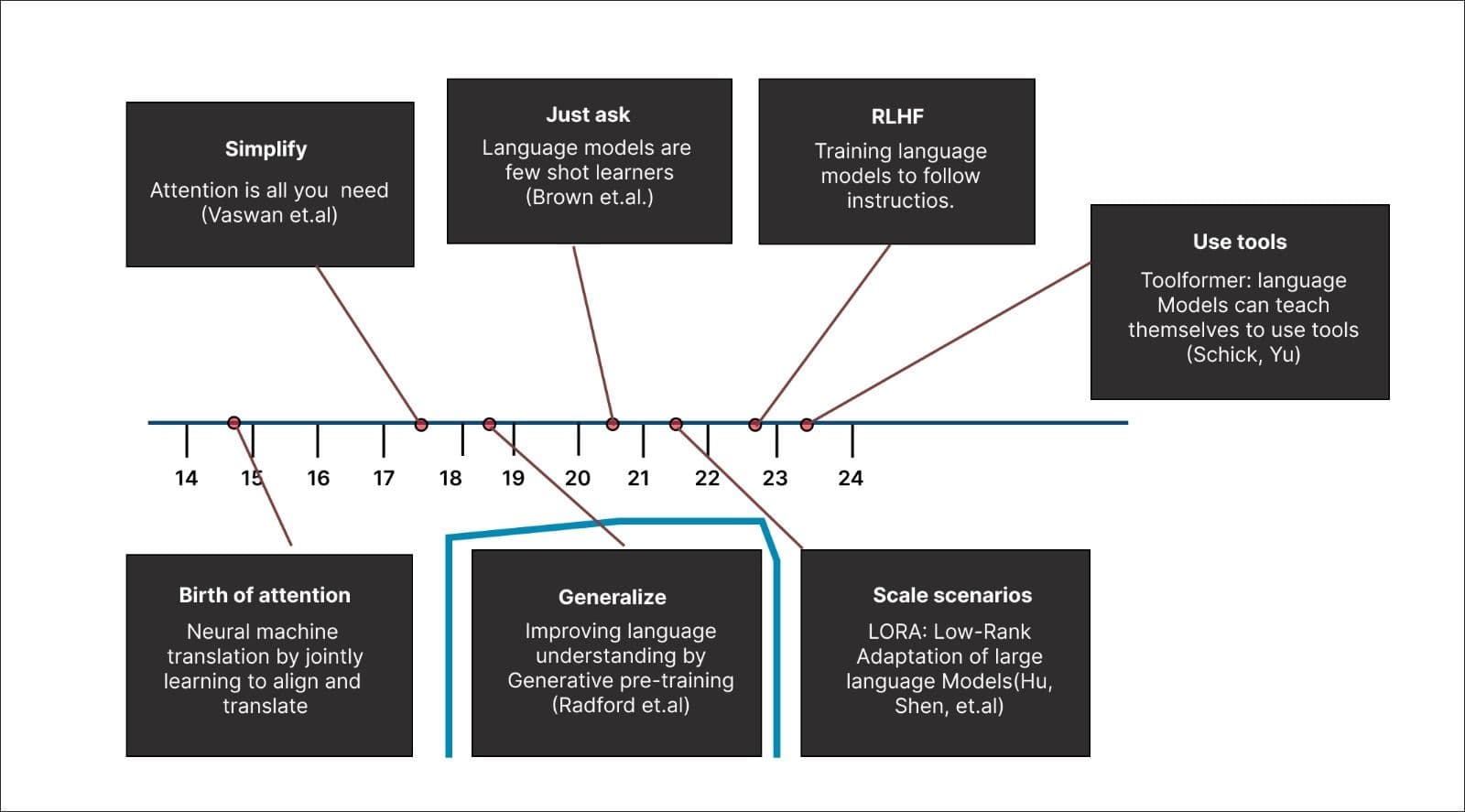
Before GPT, AI was one of the few companies like Google, Meta, Microsoft due to having vast amounts of resources such as GPU and Talents required to make AI truly production ready.
Fast forward today, GPT is like a general and all-in agent capable of excelling at multiple language tasks that does need businesses to train models for every task from scratch.
With just few shots learning technique-giving demonstrative examples to the GPT based models like Gpt-5, Gemma, Pawa-Blaze, Llama at inference time any business now can have a production ready AI-powered agents in doing almost anything from handling customer queries, to process documents, handling payments, automate onboarding, automated teaching, new language learning, improving coding capabilities to do booking.
This has increased the global AI adoption than before to nearly 85%, reported over 150M companies are actively employing production AI in their workflows.
Exploding Token Costs and Uncertain ROI
The dark side of AI adoption. In recent news this massive adoption started to backfire on most companies due to the “huge issue”- AI Token Cost that is eating several companies alive and no one ever saw it coming.

As generative AI becomes central to operations. Yet, as costs mount increases, returns on investments remain elusive. According to Deloitte’s 2025 US Tech Value survey, nearly half of leaders expect it will take up to three years to see ROI from basic AI automation, and only 28% of global finance leaders report clear, measurable value from their AI investments.
This disconnect is not just a financial headache—it’s a strategic reckoning. AI is becoming a necessity for many businesses. The challenge is no longer proving its value. In these cases, the focus shifts to how its economics are managed for organizations to thrive in a structurally different environment.
As such, enterprise technology, business leaders face a new economic reality, defined not necessarily by traditional metrics but rather the volatile, non-linear dynamics of token-based AI consumption.
Tokens: The Currency Of AI
Unlike the Pawa Builder Platform and previous technology waves where costs are tied to subscriptions, AI economics from OpenAI, Anthropic, Cohere, Open source inference platforms and other providers now revolve around tokens—the fundamental unit of AI work.
Therefore every interaction, from model training to inference, is measured in tokens, or small chunks of data that models process, making costs inherently variable and often unpredictable and hence most of the businesses become unstable.
In the their pricing they usually put small price per 1M tokens in and out, but in reality you can’t predict the usage of your customers due to:
-
Non-linear demand: Complex reasoning models capabilities in Agents consume more tokens as they perform multiple reasoning steps, tool calls, and iterations to arrive at accurate answers.
-
Fluctuating usage: Token use can fluctuate with experimentation, workload design, and prompt engineering. In practice, users often require several back-and-forth interactions before reaching a satisfactory answer, causing token usage to grow far beyond the initial request.
-
Variable pricing: The cost per million tokens usually changes over time as providers introduce more capable models, update infrastructure, or adjust their pricing strategies.
As a result, organizations frequently discover that AI costs are driven less by the advertised token price and more by the unpredictable nature of how AI systems are actually used at scale.
The Emerging AI Paradox: AI Tokens Costs Eating Companies Alive
AI can cost more than human workers now. Across the industry, companies are starting to balk at the price of AI. Increasingly autonomous agents have driven token consumption higher and higher.
Six months ago, I would have a conversation with a customer and it would be all about ‘What can it do? Is it good enough?’” Alexander Embiricos, OpenAI’s head of enterprise, told TechCrunch at an event in New York City this week. “Our conversations are never about that now. Now the conversations are about, ‘hey, we’re spending so much. What visibility do you have? What auditability do you have? What token controls do you have? What is the efficiency of your models?’”.
“People are really saying, you know, it’s kind of a meme now, but ‘My company spent my entire 2026 budget in Q1. Can you make this more efficient?’” Altman said on stage. “We are continuing to push on that more with models. I think we’ll have a lot of ways we can help people get more value for less spend. But that went from, at the beginning of this year, an issue that never came up (people were totally happy with the amount they were spending) to, all of a sudden, a huge issue.”
The math is straightforward. For a relatively mid-level startup, if each user spends just $0.50, that already adds up to about $100 per day for 200 active users. That’s roughly $700 per week and over $2,000 per month. And that’s only at a small scale—imagine what this looks like once you move into enterprise usage.
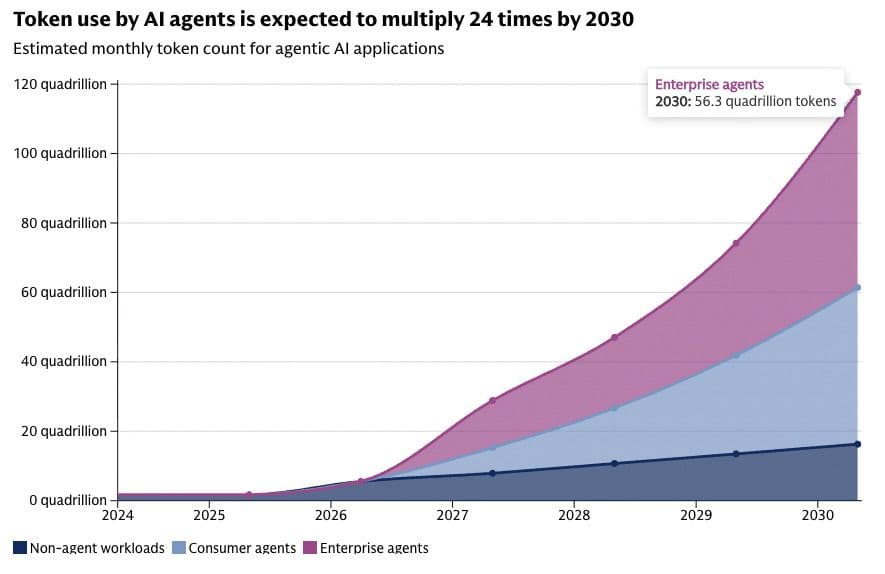
I found that by 2030 agentic AI will multiply token consumption 12 times on the consumer side, for things like online shopping, cell phone takeovers, and similar functions. Combined with adoption by enterprises, that is 120 quadrillion tokens processed per month
Back in 2023, while working as a Machine Learning Engineer at a certain company in Africa during the GPT-3 era, I worked on document processing systems and later simple chatbot products quickly realized a major issue: users would submit anything—often irrelevant or low-value queries—yet we were still being charged by LLM provider for every token processed, including useless or accidental inputs.
Over time, it became clear that this wasn’t just an edge case—it was a structural problem that would only grow as AI adoption scaled. Usage was unpredictable, costs were nonlinear, and optimization at the application layer wasn’t enough to fully control expenses.
That experience pushed me to rethink the approach entirely, which eventually led me to start Pawa AI, a company that build an Advanced General Small Language & Voice Models tailored for Africa—designed to reduce inference cost while still delivering strong global performance for real-world use cases with predictable pricing of a low-cost monthly subscription of around $35.
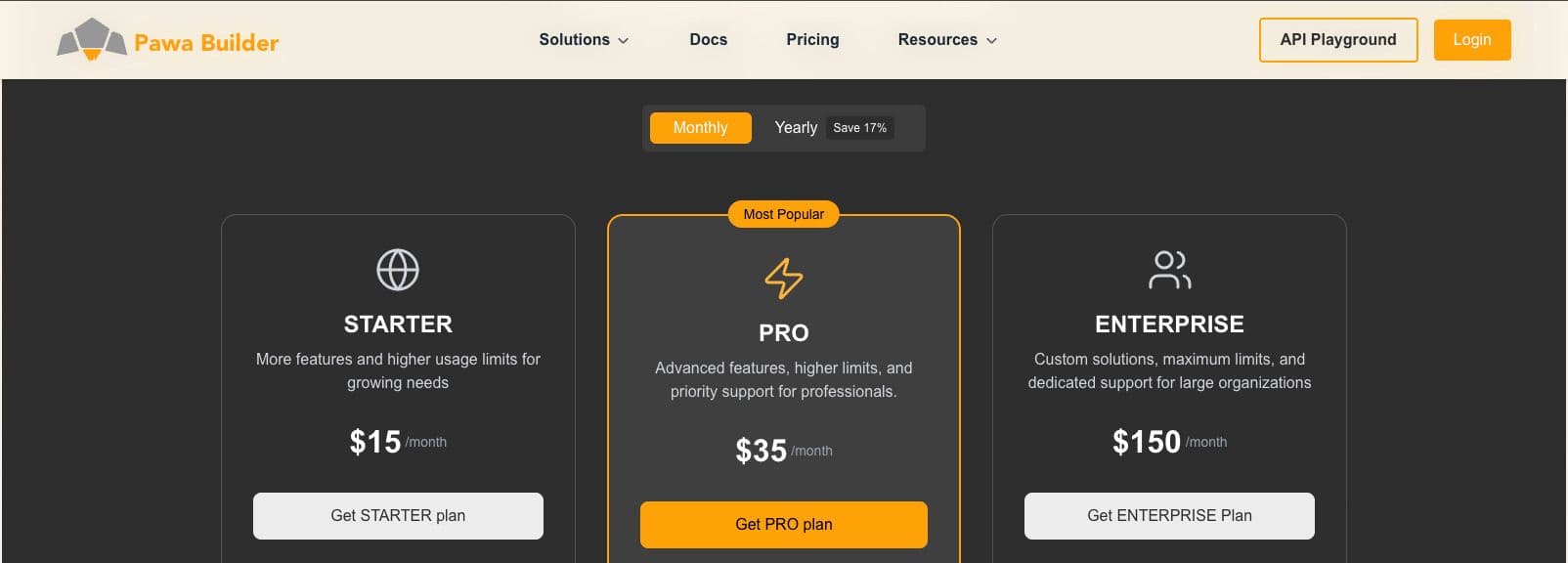
Pawa Builder From Pawa AI: The Only True Current AI Cost Saviour For Africa
Pawa Builder provides APIs, No code Interface to build, deploy custom AI Agents with global south languages, voice accents & cultures. Full privacy, secured and at less predictable cost.
Instead of relying on expensive, unpredictable token-based billing from external LLM providers, Pawa Builder gives companies control over their AI usage through a predictive monthly low cost of $35.
It enables teams to build and deploy AI agents that are not only multilingual and locally aware, but also cost-stable at scale—especially for high-volume use cases like customer support, education, document processing, and commerce.
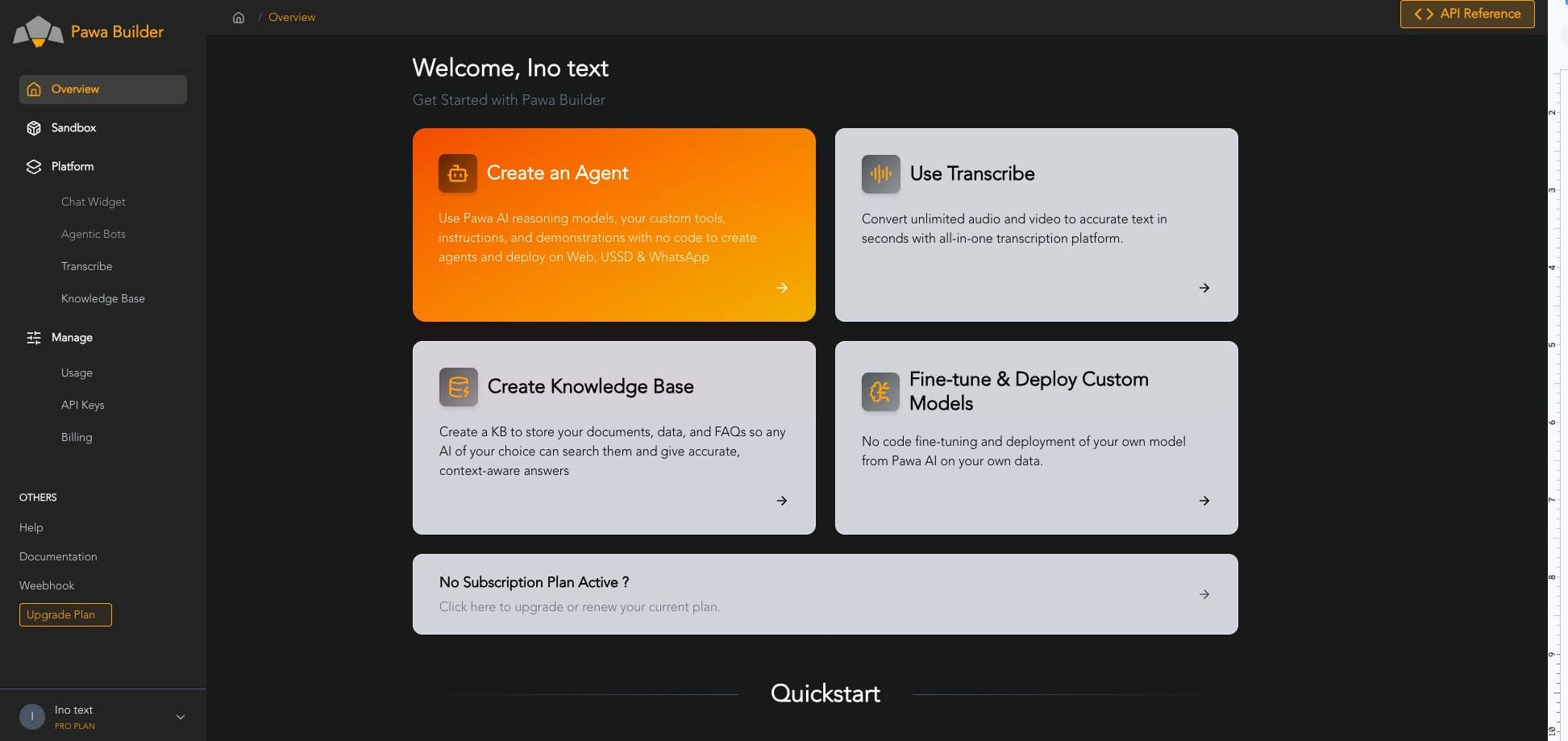
For African startups and enterprises, this means a shift from “AI is expensive and unpredictable” to “AI is infrastructure we can afford and control.” In short, Pawa Builder is not just another AI tool—it is a cost-saving foundation for building scalable, production-grade AI systems across the Global South.
What Does This Mean For Africa?
For Africa, this shift in AI economics is not just a technology trend—it’s an infrastructure opportunity. As AI becomes more agent-driven, token consumption is exploding globally, making most current systems expensive, unpredictable, and often inaccessible for many African startups and enterprises.
This creates a structural barrier where innovation depends heavily on foreign infrastructure and pricing models that are not designed for local realities. But it also opens a new window. If Africa builds or adopts more efficient, small-model-first systems like Pawa Builder, the continent can bypass the heavy cost burden of large-scale token dependency. Instead of paying for every interaction through expensive external APIs, businesses can run optimized, locally adapted AI systems that are cheaper, faster, and more controllable by Pawa AI.
This means African companies can finally deploy AI at scale in areas that matter most—education, healthcare, agriculture, fintech, and public services—without being limited by cost per token or unpredictable usage spikes. More importantly, it shifts Africa from being a passive consumer of AI infrastructure to an active builder of efficient AI systems designed for its own languages, constraints, and markets.
In short, the future isn’t just about using AI in Africa—it’s about building AI that Africa can actually afford, control, and scale.
The Key Takeaway
- The AI revolution is no longer just about capability—it is about cost efficiency, predictability, and control.
- As token consumption grows exponentially with agentic systems, the companies that win will not necessarily be the ones with the biggest models, but the ones that can deliver the same intelligence at a fraction of the cost.
- For Africa, this creates a defining moment. Relying entirely on external, token-based AI infrastructure risks limiting adoption and scaling innovation. But using efficient, small-model-driven systems like Pawa Builder unlocks a different path—one where AI is not a luxury, but a foundational utility that businesses can afford and trust.
- In this new era, the real advantage is not just intelligence—it is sustainable intelligence.
Start building today with Pawa AI's cost-efficient language and voice models, designed to help you scale intelligently and future-proof your business for long-term sustainability.